


A warehouse pallet is one of the most important and widely used pieces of equipment in modern warehousing that plays a fundamental role in the storage, transportation, and management of goods. This functional tool is essentially a movable platform designed for the easy storage and handling of goods.
Main Applications of Warehouse Pallet
Warehouse pallets serve as a strong substructure that enables the orderly arrangement of goods. These storage tools are designed in such a way that forklifts and pallet jacks can easily lift and move them. Some of the most important uses of pallets include:
-
- Storing and protecting goods from moisture on the warehouse floor
- Facilitating loading and unloading operations
- Optimizing the vertical space of the warehouse
- Increasing the speed of warehousing operations
- Reducing labor costs for moving goods
- The Importance of Using Pallets in Modern Warehousing
In today’s world, where speed and accuracy in logistics operations are of utmost importance, the use of pallets has become an undeniable necessity. Pallets not only increase efficiency in warehouses but also bring significant economic benefits:
-
- Time savings in unloading and loading by up to 70%
- Reducing damage to goods during handling
- Optimizing warehouse space and increasing storage capacity
- Standardizing warehousing processes
- Enabling the use of mechanized and automated systems
In fact, the pallet is one of the main components of the modern supply chain and plays a crucial role in improving the performance of warehouses and logistics centers. This simple yet efficient tool helps better management and increases productivity by creating order and integration in warehousing operations.
What’s more, using standardized pallets allows for greater coordination with other supply chain components and facilitates international transportation processes. This is essential for companies engaged in global trade.
Types of Warehouse Pallets
In warehousing, pallets are produced in various types, each suited for specific applications. Familiarity with the different types of pallets and their features can help in selecting the best option for the specific needs of each warehouse.
Wooden Pallets
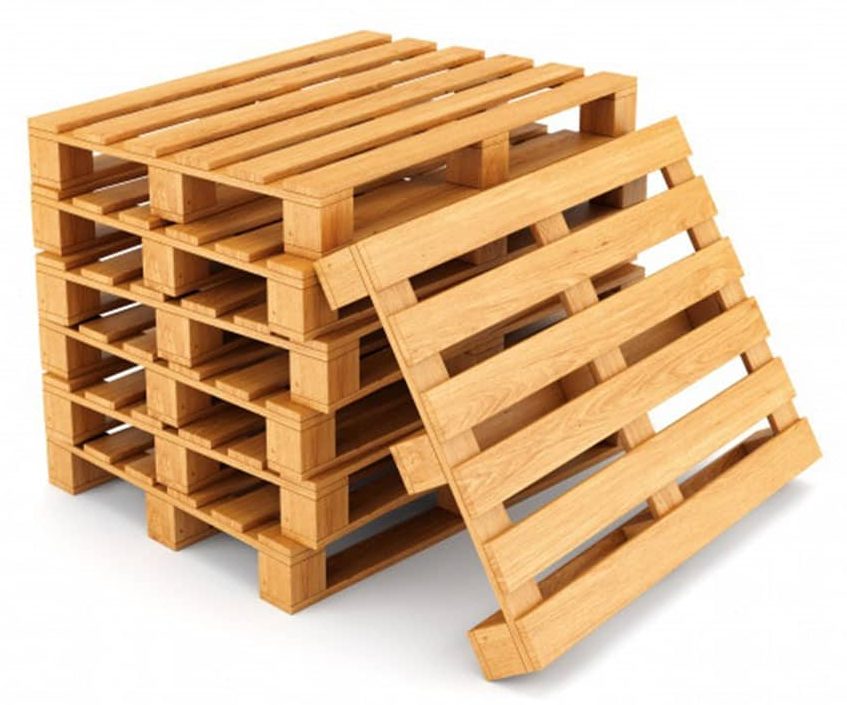
Wooden pallets are still highly popular due to their affordable price and repairability.
Advantages:
-
- Affordable price and cost-effective
- Repairable and replaceable parts
- Lightweight and relatively durable
- Environmentally friendly and recyclable
Disadvantages:
-
- Absorb moisture and prone to decay
- Shorter lifespan compared to other types
- Potential contamination in food and pharmaceutical industries
- Requires regular maintenance
Plastic Pallets

Plastic pallets are a modern and hygienic option, widely used in the food and pharmaceutical industries.
Advantages:
-
- Resistant to moisture and chemicals
- Lightweight and washable
- Long lifespan and high durability
- Suitable for hygienic environments
Disadvantages:
-
- Higher initial cost
- Less resistance to heavy loads
- Sensitive to UV light and high temperatures
- High repair cost if damaged
Metal Pallets
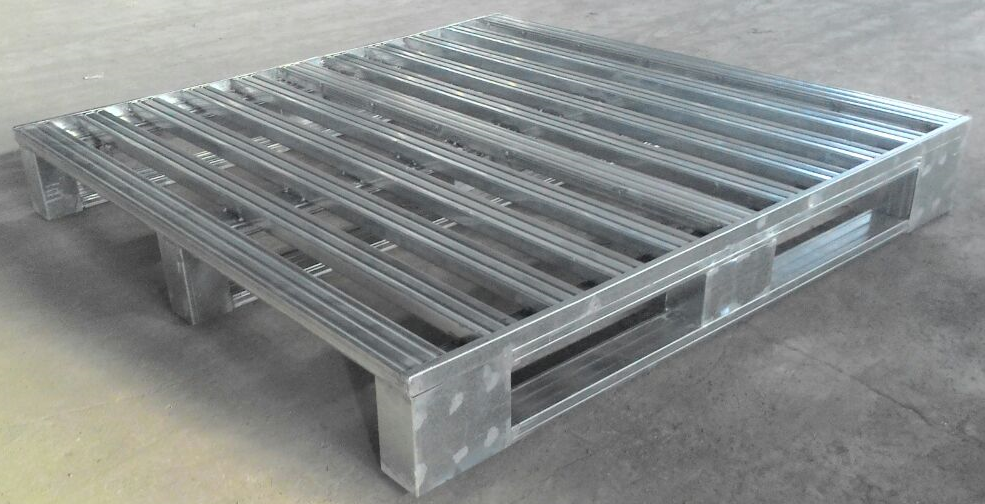
Metal pallets are designed for heavy-duty applications and specific environments and offer the highest strength among all types of pallets.
Advantages:
-
- Extremely high resistance to weight
- Long lifespan and exceptional durability
- Resistant to harsh environmental conditions
- High fire safety
Disadvantages:
-
- High price
- Heavy weight and difficult to move
- Susceptible to rust in moist environments
- Lack of flexibility in design
Selection Guide
To select the best type of pallet, the following factors should be considered:
-
- Type of goods being stored and their weight
- Environmental conditions of the warehouse (temperature, humidity)
- Amount of handling and transportation
- Available budget
- Health and safety requirements
Considering these factors, each business can choose the best type of pallet for its needs. Sometimes, a combination of different types of pallets may be required for various sections of a warehouse.
Technical Specifications of Warehouse Pallets
In warehousing, understanding the technical specifications and standards of pallets is crucial. These specifications ensure the proper performance and safety of the pallets.
Standard Dimensions
Pallets are produced in various standard sizes, with the most common being:
-
- European Pallet (Euro Pallet): 1200 × 800 mm
- American Pallet (ISO Pallet): 1200 × 1000 mm
- Standard Industrial Pallet: 1200 × 1200 mm
- Half-Size Pallet: 800 × 600 mm
The standard height of pallets is typically between 140 and 150 mm.
Load Capacity
The weight load capacity is defined in two ways:
Static Load Capacity
-
- Wooden Pallet: 1500 to 2500 kg
- Plastic Pallet: 1000 to 5000 kg
- Metal Pallet: 2000 to 4500 kg
Dynamic Load Capacity
-
- Wooden Pallet: 1000 to 1500 kg
- Plastic Pallet: 750 to 2500 kg
- Metal Pallet: 1500 to 3000 kg
Comparison Table of Pallet Types
| Feature | Metal | Wooden | Plastic |
| Weight Capacity | Very high | Medium | Medium |
| Durability | Excellent | Medium | Good |
| Price | High | Low | Medium |
| Weight | Heavy | Medium | Light |
| Chemical Resistance | Good | Weak | Excellent |
| Washability | Good | Weak | Excellent |
| Useful Life | +10 years | 2-3 years | Useful life |
Resistance and Durability
Several factors affect the resistance and durability of pallet boxes and pallets, which should be carefully considered. The material and quality of raw materials used in the construction of the pallet is the first and most important determining factor. Along with that, the manufacturing process and the way parts are connected to each other also have a direct impact on the final strength of the pallet.
The environmental conditions in which this product is used, such as humidity, temperature, and weather factors, can affect its lifespan. The amount of pressure and impacts on the pallet during use is another important factor to consider. Additionally, the frequency of use and handling can also play a role in its wear and reduced strength.
Guide to Buying the Right Pallet
Choosing the right pallet for a warehouse is one of the most important decisions in optimizing warehousing operations. This guide helps you make the best selection for your needs.
When choosing the right pallet, several key factors must be considered. First, the type of products and the load in question is of special importance, including the total weight of the load, product dimensions and shape, sensitivity and fragility of the goods, and the frequency of handling products. These factors directly impact the type and material of the pallet required.
Another important factor is budget and related costs, which should include the initial purchase cost, maintenance and repair costs, expected lifespan, and replacement costs. Additionally, the warehouse’s environmental conditions play a decisive role in pallet selection. These conditions include temperature, humidity, sunlight exposure, the likelihood of contact with chemicals, and hygiene requirements, all of which must be taken into account when selecting the type and material of the pallet.
Final Recommendations for Selection:
-
- Clearly define your needs before purchasing
- Consult with reputable suppliers
- Review and compare different samples
- Pay attention to industry standards
- Consider long-term costs
Frequently Asked Questions
What is the average lifespan of different warehouse pallets?
-
- Wooden Pallets: 3 to 5 years
- Plastic Pallets: 10 to 15 years
- Metal Pallets: Over 15 years
Can damaged pallets be repaired?
Yes, most pallets can be repaired. Metal pallets are easily repaired by replacing damaged parts. Wooden and plastic pallets can also be repaired if the damage is minor.
What weight can be placed on a pallet?
The load-bearing capacity of pallets varies:
-
- Wooden Pallets: Typically up to 1500 kg
- Plastic Pallets: Between 1000 to 5000 kg
- Metal Pallets: Up to 4500 kg

