

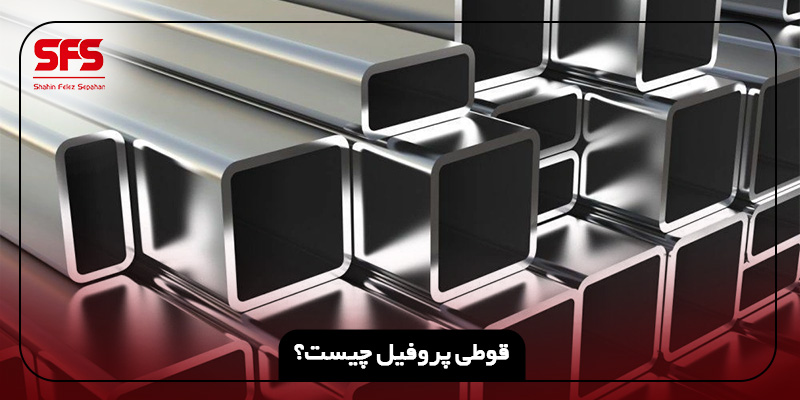
Box profiles, known in English as “box” or “steel square tube,” are produced in various types and are classified based on their material and weight. These factors determine the applications of the box profiles. Understanding the different types, applications, and factors affecting the price of iron box profiles is essential for making an informed purchase.
What is a Box Profile?
As previously mentioned, box profiles are produced in a wide range of variations. Generally, they are divided into two categories: open and closed profiles. Box profiles are a type of closed profile, meaning they have an enclosed cross-section, typically in square or rectangular shapes, and are made from steel sheets.
Manufacturing Process of Box Profiles
Box profiles are manufactured using steel sheets that typically contain elements like silica, carbon, sulfur, phosphorus, and manganese. The process begins with feeding the steel sheets into specialized machines that shape them into defined widths. These strips are then processed in additional machines, which form them into the box-like shape, either square or rectangular, and cut them to the required length.
Types of Box Profiles Based on Material and Applications
Box profiles are made from a variety of materials, each suited to specific applications. The most common types include:
-
Iron Box Profiles
These are typically produced in lengths of 6 and 12 meters and are available in various sizes depending on the intended use. One important factor for iron box profiles is their thickness, which is also known as the “meat” of the profile. Variations in thickness result in either light or heavy profiles. In the following sections, we will discuss these in more detail.
-
Aluminum Box Profiles
Used widely in industries such as construction, particularly for lightweight doors and windows. Aluminum box profiles offer advantages like energy efficiency and thermal insulation.
-
Composite Box Profiles
Made from materials like fiberglass through a process called pultrusion, these profiles are hollow and typically have square or rectangular cross-sections. They are known for their high strength, light weight, corrosion resistance, and electrical insulation properties. Applications include the construction of ladders, structural supports, and various other components.
-
Stainless Steel Box Profiles
These profiles are commonly used in construction, particularly in environments where corrosion resistance is essential. Available in grades 201 and 304, each grade has specific uses. Grade 201 is suitable for furniture, door/window frames, and decorative panels, while grade 304 is used in the food industry and other hygienic environments.
-
Galvanized Box Profiles
Made from carbon steel sheets coated with zinc, galvanized box profiles are highly resistant to rust and are ideal for use in humid environments. They are often used in window frames, agricultural machinery, and greenhouses.
Iron Box Profiles Based on Thickness: Light vs Heavy
Iron box profiles are categorized into light and heavy types based on their thickness:
-
Light Iron Box Profiles
These profiles, also known as “furniture profiles,” are made from cold-rolled steel sheets with a thickness of up to 2 mm. They are manufactured under standards such as DIN2394 and EN10219-2. Applications for light box profiles include:
- Automotive manufacturing
- Bicycle production
- Household appliances
- Furniture manufacturing
-
Heavy Iron Box Profiles
Heavy box profiles are made from black steel sheets with a thickness of at least 2 mm. These profiles are used in industries that require high strength and durability. Applications include:
- Construction and infrastructure
- Industrial machinery manufacturing
- Military industries
- Metal bridge and tower construction
By understanding the different types of box profiles, their materials, and thickness variations, you can select the appropriate profile for your specific application, ensuring both performance and cost-effectiveness.
Aluminum Box Profiles
Aluminum box profiles are widely used in industries such as construction, especially for making lightweight doors and windows. One key advantage of aluminum box profiles is their ability to reduce energy waste, contributing to energy efficiency and savings.
Composite Box Profiles
Composite box profiles, such as fiberglass profiles made through pultrusion, feature square or rectangular cross-sections and are hollow. These profiles offer numerous advantages, including:
- High strength
- Low weight
- Excellent resistance to corrosion and chemicals
- Electrical insulation properties
- Easy assembly and installation
Applications of composite box profiles include:
- Ladder construction
- Structural supports
- Signpost bases
- Handrails, fences, staircases, trusses, cross arms, etc.
Stainless Steel Box Profiles
Stainless steel box profiles are one of the most commonly used stainless steel sections in industries like construction. These profiles come in two grades: 201 and 304, with variations in alloy composition. Stainless steel box profiles are known for their corrosion resistance, making them ideal for:
- Oil and gas industries
- Petrochemical industries
- Fence and barrier manufacturing
- Decorative applications due to their aesthetic appeal
Specific uses for the two grades include:
- Grade 201: used for workbenches, door/window frames, shelves, and building facades.
- Grade 304: used in the manufacture of sterilization equipment, dairy production facilities, and food-grade applications.
Galvanized Box Profiles
Galvanized box profiles are made from carbon steel sheets coated with zinc, offering superior rust resistance. They are primarily used in areas with high humidity, where rusting is a concern. Key applications include:
- Window frames
- Agricultural and greenhouse applications
- Various shapes, such as U-profiles, H-profiles, and semi-circular profiles
Iron Box Profiles Based on Weight (Light and Heavy)
Iron box profiles are categorized into light and heavy types based on their thickness. Each type has distinct features and uses:
-
Light Iron Box Profiles (Furniture Profiles)
These profiles are made from cold-rolled steel sheets with a thickness of up to 2 mm. They are produced under standards like DIN2394 and EN10219-2. Light box profiles are known for:
- High-quality surface finish
- Precision in diameter and thickness
- Flexibility in shaping
- Variety in weight
- Ease of coating
Some key applications of light iron box profiles include:
- Automotive manufacturing
- Bicycle production
- Household appliances
- Furniture and chair manufacturing
-
Heavy Iron Box Profiles
Heavy iron box profiles are made from black steel sheets with a thickness of at least 2 mm. These profiles are used in industries that require high strength, stability, and durability. Notable features include:
- High torsional and bending stability
- Excellent weldability
- Surface hardness
Heavy box profiles are used in:
- Industrial building construction (sheds, warehouses)
- Machinery and equipment manufacturing
- Military industries
- Construction and civil engineering
- Metal bridge and tower manufacturing
Industrial Column Box Profiles
These profiles are made with a thickness of more than 6 mm, resulting in heavier sections. Their applications include:
- Warehouse construction (sheds)
- Industrial equipment manufacturing
- Military applications
- Civil engineering and building construction
- Automotive industry
- Bridge and tower construction
By choosing the right box profile for your project, whether it’s lightweight aluminum or heavy-duty iron, you ensure the structural integrity and efficiency of your applications.
Box Profile Applications in Bridge Construction
Box profiles play an essential role in the construction of bridges, particularly in the structural components of steel bridges. The high strength and rigidity of box profiles make them ideal for use in load-bearing parts like beams, supports, and trusses. When applied in bridge construction, box profiles provide enhanced stability and can withstand the stress and strain caused by traffic loads and environmental conditions.
Building Column Box Profiles
Building column box profiles are typically square and range in dimensions from 100 mm to 140 mm in side length with thicknesses between 2 mm and 6 mm. Some of their key applications include:
- Building columns: Used for vertical support in construction.
- Medical equipment: For making durable and strong frames.
- Advertising boards: Frames for billboards and other signage.
- Large steel frameworks: Used in the construction of large steel structures.
How to Construct Steel Frames with Box Profiles
A steel frame consists of vertical columns and horizontal beams that form rectangular grids. Box profiles can replace certain sections within these steel structures, providing high inertia resistance. This is particularly beneficial for bending frames where high resistance to bending is required. Therefore, box profiles are typically used for steel column construction, where they must resist bending moments in two directions.
Standard Sizes of Square Box Profiles
The standard sizes for square box profiles range from 10 mm x 10 mm to 500 mm x 500 mm. The smallest size is 1 cm, and the largest can reach 50 cm.
Standard Sizes of Rectangular Box Profiles
Rectangular box profiles have varying lengths and widths for the cross-section. The smallest length for rectangular profiles is 100 mm, with the smallest width being 40 mm. The largest width for rectangular profiles is 135 mm, and the largest length is 300 mm. The thickness of these profiles varies between 2.5 mm and 8 mm.
Calculating the Weight of Box Profiles
The weight of a box profile is directly related to its length and thickness. The greater the thickness and length, the higher the weight. The weight of a profile can be calculated using the following formula:
Weight = Volume × Density
Where:
- Volume = Cross-sectional area × Length of the profile
- Density of the material (e.g., steel) is typically around 7.85 g/cm³.
This calculation helps in determining the amount of material needed for the construction, transportation, and overall cost of the project.
Square Tube Dimensions with 1mm Thickness
In the table below, we will review the specifications of steel square tubes (5050, 2020, etc.) with different thicknesses.
What Factors Affect the Price of Steel Square Tubes?
Several factors influence the price of steel square tubes. Generally, the price of square tubes is affected by the following factors:
- Sheet price
- Material type used for the sheet
- Cost of raw materials
- Weight of the steel tube profile
- Manufacturing standard of the tube
One of the most commonly used square tubes is the 20×20 model. On the Shahin Felez Sepahan website, the daily prices for 2×2, 4×4 square tubes, and other sizes are provided to customers.
What Are the Benefits of Using Steel Square Tubes?
Using steel square tubes in construction projects offers many advantages to consumers. Some of these include:
- Due to the weight and price of square tubes, using this product instead of other steel sections can result in significant cost savings for the overall project.
- Replacing wood with steel square tubes in construction increases the durability of the structure.
- The lightweight nature of the square tubes reduces the overall weight of the building.
- Using less wood in construction minimizes environmental damage.
Conclusion
In this article, we introduced steel square tubes, their types, applications, and benefits. Clearly, the more familiar we are with a product, the better we can make informed purchases based on our needs.
Additionally, it is important to consult with relevant experts. Shahin Felez Sepahan is one of the largest manufacturers of steel square tubes, and the experts at this company are always available for consultation and answering customer inquiries.
FAQs
What is a square tube?
A square tube, or metal box, is a widely used profile in the industry and is made from iron sheet and black sheet metal. The cross-section of square tubes is either square or rectangular, and they have a box-like shape.
What is a building square tube?
A building square tube is a type of heavy square tube profile used in columns and the skeleton of buildings.
How is a building skeleton constructed with square tubes?
A metal skeleton consists of a series of vertical columns and horizontal beams connected in rectangular grids. Steel square tubes can replace some parts of this structure.
Also read these articles


قیمت قوطی 2*2
553000
قیمت پروفیل زد
673,000
قیمت چهارچوب فرانسوی
تماس بگیرید
قیمت آبرو سوله
تماس بگیرید

